AI Based SEO Tools Guide (2026): The Complete Playbook
Discover the best AI-based search engine optimization tools in 2026. Learn how AI is reshaping SEO and how to build a free AI SEO workflow that delivers results.
Start Using Free SEO Tools →⚠️ AI Is Changing SEO Faster Than Ever in 2026
Google uses AI (RankBrain, MUM, Gemini) to rank content. AI Overviews now appear in nearly 48% of Google searches (BrightEdge, 2026). If you're not using AI in your SEO workflow, you're falling behind — fast.
But here's the good news: you don't need to spend hundreds of dollars a month to stay competitive. This guide shows you exactly which AI SEO tools to use, which are free, and how to combine them into a workflow that actually works.
📖 Table of Contents
- 1. What Are AI-Based SEO Tools?
- 2. How Google Uses AI to Rank Content in 2026
- 3. The AI SEO Landscape: What Changed in 2026
- 4. Best AI SEO Tools in 2026 (Free & Paid)
- 5. Free vs Paid AI SEO Tools: Full Comparison
- 6. Complete AI SEO Workflow (Step by Step)
- 7. How to Optimize for Google AI Overviews
- 8. AI SEO for Technical SEO — Free Tools
- 9. Common AI SEO Mistakes to Avoid
- 10. AI SEO by Use Case
- 11. Frequently Asked Questions
1. What Are AI-Based SEO Tools?
AI-based SEO tools use artificial intelligence and machine learning to automate and improve search engine optimization tasks. Instead of spending hours doing manual research, AI tools analyze data at scale, predict outcomes, and surface insights that would take humans days to find.
In 2026, AI SEO tools cover five main categories:
- Content generation — Write blog posts, meta descriptions, and product descriptions
- Keyword research — Find high-value keywords with low competition automatically
- Technical analysis — Detect SSL issues, DNS errors, broken redirects, and meta tag problems instantly
- Competitor analysis — Understand exactly what your competitors are doing right
- Rank tracking — Monitor keyword positions across Google, ChatGPT, Gemini, and Perplexity simultaneously
What makes 2026 different from previous years is that AI SEO is no longer just about automating tasks — it's about optimizing for AI-powered search engines themselves. Google's search results page is now an AI page first and a list of links second.
2. How Google Uses AI to Rank Content in 2026
To understand which AI SEO tools matter, you first need to understand how Google's own AI works. Google uses multiple AI systems stacked on top of each other:
RankBrain (2015–present)
RankBrain was Google's first major AI system. It interprets unfamiliar queries by understanding semantic relationships between words. If someone searches for "best way to see if website is secure," RankBrain understands they're asking about SSL certificates — even though those exact words weren't used.
What this means for SEO: Write content that covers topics comprehensively, not just specific keywords. Semantic depth matters more than keyword density.
BERT (2019–present)
BERT (Bidirectional Encoder Representations from Transformers) understands context and nuance in natural language. It reads sentences in both directions simultaneously, understanding how each word relates to all other words in a sentence.
What this means for SEO: Write like a human explaining something to another human. Natural language outperforms keyword-stuffed content.
MUM (2021–present)
MUM (Multitask Unified Model) understands information across languages and formats simultaneously — text, images, and video. It's 1,000 times more powerful than BERT.
What this means for SEO: Content quality, not quantity, is what gets rewarded. One comprehensive, authoritative page beats ten thin pages.
Google Gemini (2023–present) — The Biggest Change
Gemini is Google's latest large language model and the most important development for SEO in 2026. It powers:
- AI Overviews — Automated summaries that appear at the top of search results
- AI Mode — A full conversational search experience for complex queries where users can ask follow-up questions and go deeper
- Gemini in Chrome — A browser-integrated AI assistant
Gemini doesn't just rank pages — it selects specific content sections based on clarity, trust, and relevance. This is a fundamental shift: traditional SEO ranks URLs, while Gemini's "retrieval SEO" pulls specific passages from content.
Critical 2026 statistic: When an AI Overview appears, the click-through rate drops from 15% to 8%. This means appearing in the AI Overview itself has become as valuable as ranking #1 organically.
3. The AI SEO Landscape: What Changed in 2026
Generative Engine Optimization (GEO) is now mainstream
GEO — optimizing your content to appear in AI-generated answers from ChatGPT, Google AI Overviews, Perplexity, and Claude — is the fastest-growing SEO category in 2026. BrightEdge research shows brands cited in AI Overviews see 35% more organic clicks than those that aren't.
Search happens everywhere, not just Google
Users now research across Google, YouTube, ChatGPT, Perplexity, Claude, Reddit, and TikTok. "Search everywhere optimization" is replacing traditional SEO-only strategies.
Zero-click searches are at an all-time high
The 60% zero-click rate means more users get answers without clicking any result. If your content is cited in an AI Overview, you still get brand visibility and authority — even without the click. Structured data, named entities, and citation-ready content are the tactics that drive AI citations.
4. Best AI SEO Tools in 2026 (Free & Paid)
🆓 Free AI SEO Tools
Rankcept — Technical SEO (100% Free)
The most comprehensive free technical SEO toolkit available. No account required, no usage limits.
| Tool | What It Does |
|---|---|
| SSL Lookup | Check SSL certificate validity, expiry, and TLS version |
| DNS Lookup | Query all DNS records for any domain instantly |
| Meta Tags Checker | Analyze title, description, robots, and canonical tags |
| URL Redirect Checker | Trace full redirect chains and find broken links |
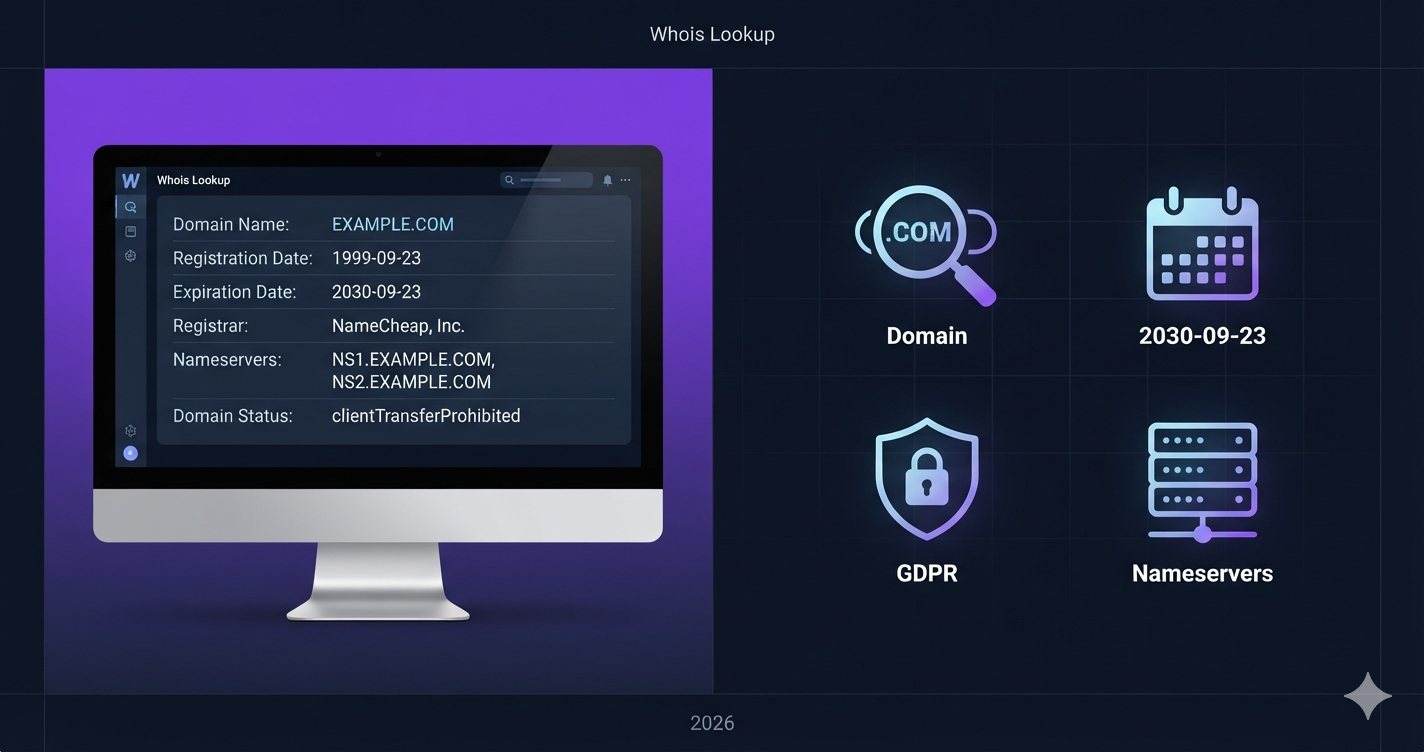
| Whois Lookup | Check domain age, registrar, and ownership details |
ChatGPT (Free tier) — Content & Keywords
ChatGPT's free tier handles a surprising amount of SEO work: keyword lists, meta descriptions, content outlines, competitor title analysis, and content gap identification.
Google Search Console (Free) — Data & Indexing
Still the most important free SEO tool in existence. Shows exactly which queries trigger your pages, which pages are indexed, and what technical issues Google has found.
Google's Rich Results Test (Free) — Schema Validation
Verify that your structured data (Schema markup) is correctly implemented and eligible for rich results in search.
Google PageSpeed Insights (Free) — Core Web Vitals
Check your page speed scores and Core Web Vitals — which Google uses as ranking signals.
💰 Paid AI SEO Tools Worth Considering
Surfer SEO ($59–$239/month) — Real-time content optimization against top-ranking competitors. Best for: optimizing existing content.
Frase ($44–$115/month) — Auto-generates content briefs from top search results. Best for: content planning and research.
SE Ranking ($129/month) — Tracks visibility across traditional Google AND AI search (ChatGPT, AI Overviews, Perplexity, Gemini). Best for: unified cross-platform tracking.
Semrush ($139–$499/month) — The most comprehensive paid SEO platform. Best for: enterprises and agencies.
Ahrefs ($129–$449/month) — Industry gold standard for backlink analysis. Best for: backlink strategy and content gap analysis.
Jasper ($39–$99/month) — Specialized AI writing assistant for high-volume content production. Best for: content teams.
5. Free vs Paid AI SEO Tools: Full Comparison
| Feature | Free (Rankcept + ChatGPT + GSC) | Paid (Surfer, Semrush, SE Ranking) |
|---|---|---|
| Price | $0 | $39–$499/month |
| Technical SEO Check | ✅ Full (SSL, DNS, Meta, Redirects) | ✅ Full |
| Keyword Research | ⚠️ Basic (GSC + ChatGPT ideas) | ✅ Advanced with volume data |
| Content Optimization | ⚠️ Manual (ChatGPT guidance) | ✅ Real-time competitor scoring |
| Rank Tracking | ⚠️ GSC only (limited) | ✅ Daily tracking, all keywords |
| AI Overview Tracking | ❌ Not available | ✅ SE Ranking, Semrush |
| Backlink Analysis | ❌ Not available | ✅ Full (Ahrefs, Semrush) |
| Best For | New sites, solopreneurs, technical checks | Growing sites, agencies, teams |
The honest recommendation: If your website is new (under 6 months old), free tools handle 80% of what you need. Paid tools deliver their full ROI when you have enough traffic and content to need detailed analysis.
6. Complete AI SEO Workflow (Step by Step)
Step 1: Technical Health Check (15 minutes, free)
Before anything else, your site's technical foundation must be solid. AI content is completely useless if your site has SSL issues, DNS errors, or broken redirects.
- SSL certificate → SSL Lookup — Is it valid? TLS 1.3 enabled? Renew if under 30 days remaining.
- DNS records → DNS Lookup — Are A, MX, TXT, CNAME correctly configured? SPF and DKIM set up?
- Meta tags → Meta Tags Checker — Unique title under 60 chars? Meta description 120–158 chars? No accidental noindex?
- Redirects → URL Redirect Checker — http:// and www. redirect correctly? No loops or chains longer than 2 hops?
- Domain info → Whois Lookup — Domain not expiring soon? Auto-renewal enabled?
Step 2: Keyword Research with AI (30 minutes, free)
Use ChatGPT to generate keyword ideas, then validate with Google Search Console. Use this prompt:
I run a website about [your topic].
Generate 20 long-tail keyword ideas where:
1. The search intent is informational (how to, what is, guide)
2. A new website could realistically rank within 6 months
3. Each keyword has clear value for my audience
Format: keyword | difficulty (low/medium/high) | user intent
Step 3: Content Planning and Optimization
- Search the keyword in Google — look at the top 5 results
- Ask ChatGPT: "What questions do people who search for [keyword] actually want answered?"
- Write your content addressing those sub-topics more thoroughly than any competitor
- Use ChatGPT to review and improve your meta title and description
- Check your final meta tags with Meta Tags Checker
Step 4: Publish and Track
- Submit the URL in Google Search Console → URL Inspection → Request Indexing
- Track impressions and position in GSC weekly
- Re-check competitor meta tags monthly
- Update content every 6 months with new information
7. How to Optimize for Google AI Overviews
Write Answer-First Sections
Gemini selects specific content sections, not whole pages. Answer the question in the first 2–3 sentences, then expand.
❌ Wrong:
What is DNS?
DNS, or Domain Name System, is a complex infrastructure
that was developed in the 1980s by Paul Mockapetris...
✅ Right:
What is DNS?
DNS (Domain Name System) translates domain names into IP
addresses, allowing browsers to find websites. Think of
it as the internet's phone book. [Then expand...]
Target Conversational Queries
- ✅ "how do I check if my ssl certificate is expired"
- ✅ "what does an mx record do"
- ✅ "why is my website showing not secure"
- ❌ "ssl certificate check" (too generic)
Build E-E-A-T Signals
- Add visible dates to all content and update them when you revise
- Name the author on every piece of content
- Link to primary sources for statistics and claims
Ensure Technical Prerequisites
- HTTPS required — check with SSL Lookup
- Pages must be indexable — no noindex tags on target pages
- Site must be fast — aim for LCP under 2.5 seconds
- Mobile-friendly is non-negotiable
8. AI SEO for Technical SEO — Free Tools
SSL & Security
Use SSL Lookup: Certificate valid and browser-trusted? TLS 1.2 or 1.3? Not expiring within 30 days? HSTS enabled?
Why it matters: Gemini requires valid HTTPS to cite a page. An expired SSL certificate makes your content invisible to AI Overviews.
DNS Health
Use DNS Lookup: A record points to correct IP? MX records configured? SPF and DKIM in TXT records? No conflicting CNAMEs?
Meta Tag Audit
Use Meta Tags Checker: Title 50–60 chars with primary keyword? Description 120–158 chars? Canonical pointing to correct URL? No accidental noindex?
Redirect Audit
Use URL Redirect Checker: http:// → https:// is 301 (not 302)? www. redirect works? No redirect chains over 2 hops? No loops?
Domain Check
Use Whois Lookup: Domain not expiring soon? Auto-renewal active? Registration far enough in advance?
9. Common AI SEO Mistakes to Avoid
🔴 Publishing AI Content Without Editing
Google penalizes low-quality AI content — not AI-assisted content, but lazy unedited output with no original value. Always review, fact-check, and add your own expertise.
🔴 Ignoring Technical SEO
AI content is wasted if your site has SSL issues, broken redirects, or noindex tags. Gemini won't cite a site with technical problems. Run Rankcept's free checks first.
🔴 Only Optimizing for Short Keywords
In 2026, conversational question-based content is what AI Overviews pull from. Restructure at least some content around how people actually ask questions.
🔴 Over-Optimizing Keyword Density
AI tools can suggest unnatural keyword usage. Write for humans first. Semantic relevance and topical depth matter far more than keyword density in 2026.
🔴 Tracking Only Traditional Rankings
AI Overview citations and zero-click visibility are forms of search presence that traditional rank trackers don't capture. Track GSC impressions alongside position.
🔴 Skipping Schema Markup
FAQPage schema turns your FAQ section into a direct AI Overview candidate. Article schema gives Gemini the metadata it needs to confidently cite your content.
🔴 Not Updating Old Content
Gemini prioritizes "precise, current, and verifiable" content. Schedule content reviews every 6 months and update dates visibly when you revise.
10. AI SEO by Use Case
New Websites (Under 6 Months Old)
Tools: Rankcept + ChatGPT + Google Search Console
- Fix all technical issues first — SSL, DNS, meta tags, redirects
- Target long-tail, low-competition keywords only
- Publish 1-2 comprehensive articles per week
- Submit all URLs to GSC for indexing immediately
- Build 2-3 quality backlinks per month from directories and guest posts
Realistic timeline: First organic clicks at 3-6 months; meaningful traffic at 6-12 months.
Small Businesses
Tools: Rankcept + ChatGPT + Google Business Profile + GSC
- Optimize Google Business Profile — affects both local and AI search
- Fix technical health issues (most small business sites have SSL or meta tag problems)
- Create location-based content targeting "near me" queries
- Build citations on business directories
Developers and Technical Sites
Tools: Rankcept + ChatGPT + SE Ranking + Ahrefs
- Target high-intent technical queries: "how to check X", "free tool for Y"
- Create tool-based content linking to and demonstrating your tools
- Build backlinks from developer communities (Dev.to, GitHub, Hacker News)
- Monitor your brand in AI tools — developers increasingly use ChatGPT to find tools
Content Sites and Blogs
Tools: ChatGPT + Surfer SEO + GSC + Rankcept
- Build content clusters — 1 pillar page + 5-10 supporting articles per topic
- Use Surfer SEO to optimize content against top-ranking competitors
- Refresh top-performing articles every 6 months
- Focus on FAQ schema to appear in AI Overviews
11. Frequently Asked Questions
🔧 Free AI SEO Tools — Start Today
Check SSL, DNS, meta tags, and redirects — completely free, no signup required.
Start Using Free AI SEO Tools Today
Check SSL, DNS, meta tags, and redirects — completely free, no signup required.
🚀 Launch Free SEO Tools →Disclaimer: This guide is for educational purposes. SEO results vary based on competition, industry, and content quality.